

 See My Latest Article on HelloNation
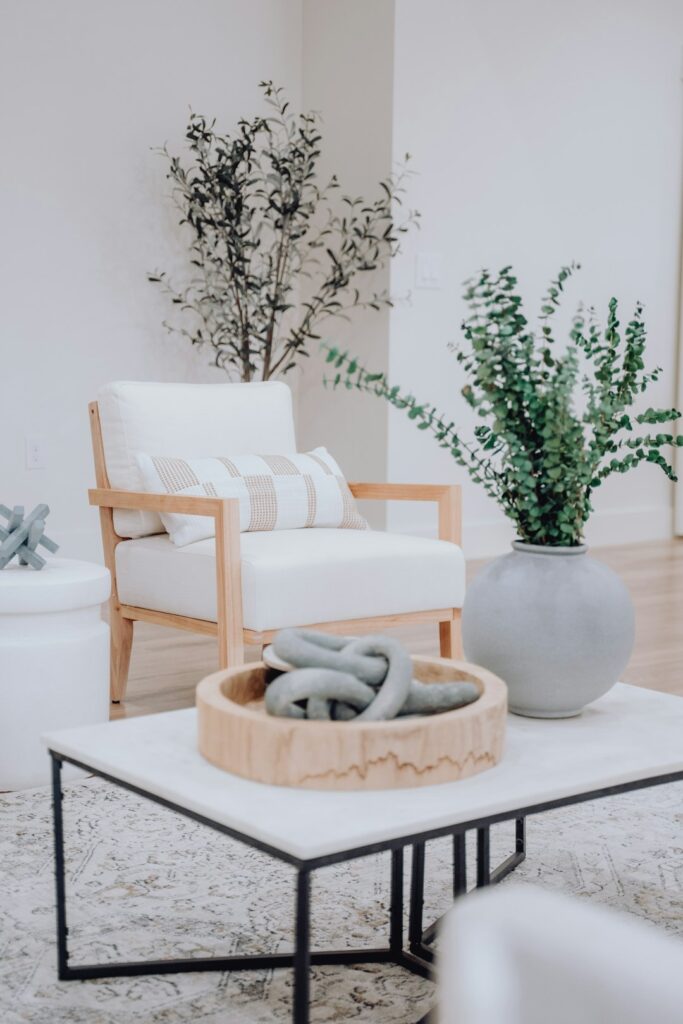
A well-styled coffee table should look intentional without becoming difficult to use. The most successful arrangements balance height, texture, function, and open space so the table supports everyday life rather than simply serving as decoration.
What should go on a coffee table?
A practical coffee table arrangement usually includes a low tray or shallow bowl, one or two books, a small decorative object, and something organic such as a plant, branch, or seasonal stem. The exact combination depends on the table’s size, the room’s style, and how often the space is used.
A simple starting formula is:
- A grounding piece: tray, bowl, or stack of books
- A vertical element: vase, small lamp, sculptural object, or plant
- A tactile element: woven material, wood, ceramic, stone, or glass
- Open space: an area for drinks, remotes, or temporary items
The goal is not to fill every inch. A coffee table feels more polished when some of its surface remains visible.
How do you arrange objects by height?
Varying height creates visual interest and prevents the table from looking flat. Place the tallest object toward one side or near the back edge, then use shorter pieces to create a gradual visual transition.
For example, a vase may stand beside a medium-height stack of books, while a low bowl or tray sits in front. Avoid placing several objects at exactly the same height, since the arrangement can begin to look rigid or crowded.
A useful guideline is to create three levels:
- Tall: vase, plant, or sculptural object
- Medium: books, candleholder, or lidded container
- Low: tray, bowl, coaster set, or small dish
The tallest piece should not interfere with conversation across the room. If guests must look around the centerpiece, the arrangement is probably too high.
Should a coffee table have a tray?
A tray is helpful but not required. It groups smaller objects into a defined zone and makes it easier to clear the table when the room is needed for snacks, games, or gatherings.
Choose a tray that leaves a border of visible tabletop around it. A tray that nearly fills the entire surface can make the table look smaller and limit flexibility. Rectangular trays work well on long tables, while round or square trays can soften the appearance of a compact table.
For households that regularly deal with tracked-in sand, a tray also creates a contained area for decorative pieces. Smooth materials are generally easier to wipe clean than heavily textured surfaces that collect grit.
How many items should be placed on the table?
The right number depends on the table’s dimensions, but fewer objects usually create a calmer result. A small table may need only three to five pieces, while a larger rectangular table can support several groupings.
Rather than scattering individual items across the surface, arrange them in clusters. Odd numbers often look natural, but balance matters more than counting. Two objects can work well if they differ in height or shape.
Leave practical clearance around the seating area. People should be able to set down a glass, place a book, or move a remote without shifting the entire arrangement.
What works well in homes near the coast?
Homes in Santa Rosa Beach, FL often benefit from materials that tolerate humidity, bright sunlight, frequent cleaning, and casual indoor-outdoor living. Coastal style does not require a table covered in shells or nautical decorations. A more enduring approach uses natural textures and a restrained palette.
Consider:
- Light or medium-tone wood
- Glazed ceramic that can be wiped clean
- Woven trays with a relatively tight pattern
- Stone or stone-look objects
- Clear or lightly tinted glass
- Cotton or linen-covered books and accessories
Highly delicate paper, untreated metals, and materials that discolor easily may require more maintenance in a humid environment. Direct sunlight can also fade book covers, textiles, and artwork over time, particularly when the table sits near large windows or glass doors.
How can a coffee table remain functional for daily life?
Style the table according to the room’s actual habits. A formal arrangement may look attractive but become frustrating if the household watches television there, hosts children, or eats casual meals in the living room.
Use a lidded box or shallow container for remotes and small necessities. Keep coasters accessible rather than hidden under decorative objects. If the table is frequently used for meals, leave a clear central area or use a tray that can be lifted away in one motion.
For homes with children or pets, avoid sharp-edged objects, unstable glass pieces, and small items that can be swallowed. Heavy decorative objects should be placed where they are unlikely to be pulled down by a curious child or active pet.
How do you style a round coffee table?

A round table looks best with arrangements that echo its curved shape. A round tray, bowl, or low centerpiece can reinforce the form, while rectangular stacks of books can add contrast.
Avoid arranging items in a straight line across the diameter. Instead, create a loose triangle with a taller object, a medium object, and a low object. This keeps the composition balanced from multiple viewing angles.
Because round tables are often positioned in the center of a seating area, check the arrangement from every side. A design that looks attractive from one sofa may appear unbalanced from another seat.
How do you style a rectangular coffee table?
Rectangular tables can support two or three visual groupings. A common arrangement places one grouping near one end, a second grouping toward the opposite end, and open space between them.
For a long table, a tray can anchor one side while a single vase or stack of books balances the other. Avoid placing one large object directly in the center unless the table is rarely used, since it can divide the usable surface.
The table’s proportions also matter. A narrow table may need a low, linear arrangement, while a wider table can accommodate more depth without blocking movement.
Which colors and textures create a relaxed look?
A relaxed arrangement usually combines two or three related colors with contrasting textures. For example, pale wood, warm white ceramic, and muted blue-gray accents can feel airy without appearing overly themed.
Texture is especially useful when the color palette is simple. Combine smooth glass with rough stone, woven fibers with glazed ceramic, or matte paper with polished wood. Repeating one material from elsewhere in the room helps the table feel connected to the larger design.
Avoid introducing too many unrelated accent colors. A coffee table is a small area, and excessive contrast can make it look busy even when there are only a few objects.
What common coffee table styling mistakes should be avoided?
The most frequent mistake is treating the table like a display shelf rather than a usable surface. Other problems include excessive height, too many small accessories, and objects that do not relate to the room.
Watch for these issues:
- Every item is the same height
- Decorative pieces are spread randomly instead of grouped
- Books are stacked too high to use comfortably
- The arrangement blocks sightlines between seats
- Fragile materials are placed in high-traffic areas
- The table is filled edge to edge
- Seasonal decorations remain long after they suit the room
A quick edit often improves the arrangement more than adding another object. Remove one or two pieces, then view the table from the main seating positions.
How often should the arrangement change?
A coffee table does not need constant restyling. Small seasonal adjustments are enough: change a vase, rotate the books, replace a bowl with a tray, or add a natural element from the surrounding landscape.
In a humid, sandy setting, regular light cleaning is more useful than frequent redecorating. Dust and grit are easier to manage when accessories can be lifted quickly and the tabletop remains partly exposed.
The strongest arrangement is one that looks considered but still welcomes everyday use. Start with the table’s function, add a few varied shapes and materials, and preserve enough open space for the routines of the household.