

 See My Latest Article on HelloNation
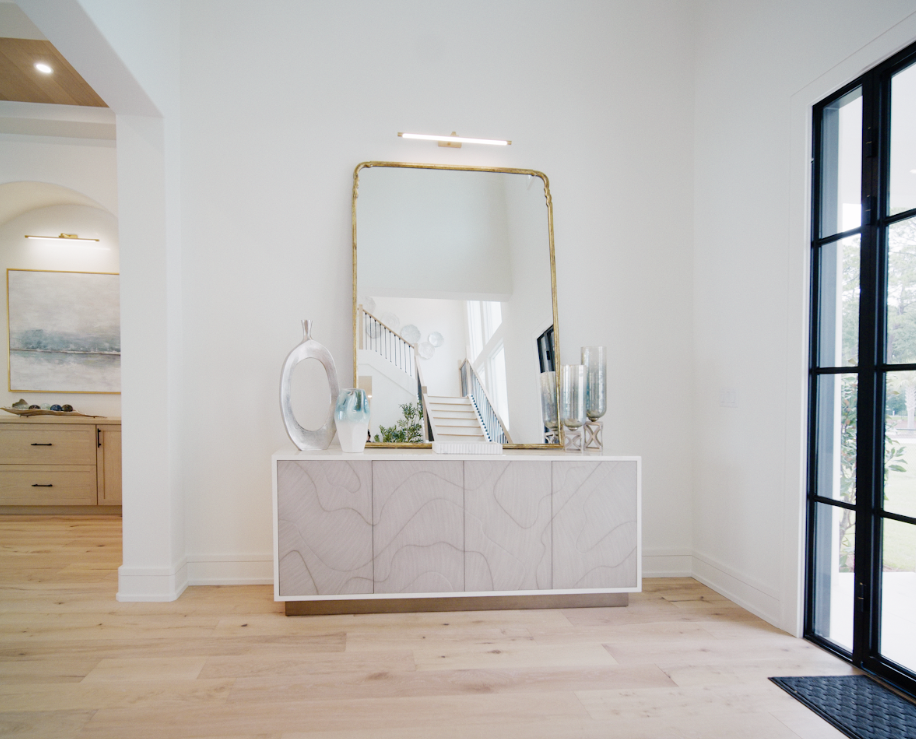
An entryway sets the tone for the rest of a home, but it also has to handle everyday traffic. In Santa Rosa Beach, FL, that often means accommodating sandy feet, damp towels, beach gear, sun hats, deliveries, and guests moving between indoor and outdoor spaces.
A well-planned entry does not need to be large or expensive. It needs clear walking space, durable surfaces, practical storage, and a visual transition that feels connected to the rest of the home.
What should an entryway include?
A useful entryway usually needs four basic elements: a place to pause, a place to store items, a surface that can handle frequent use, and adequate lighting.
The exact combination depends on the size and location of the entrance. A spacious foyer may support a console, bench, mirror, and closed storage. A narrow front door may need only wall hooks, a slim shelf, and a washable runner.
Consider including:
- A small bench or sturdy stool for removing shoes
- Hooks or pegs for hats, lightweight jackets, and bags
- A tray for keys, sunglasses, and other small items
- A mirror to reflect light and provide a last-minute check before leaving
- A washable mat inside the door
- Closed storage for items that should remain out of sight
- Lighting that is bright enough for safe movement at night
The goal is not to fill the space. An entryway works best when the path through the home remains open.
How can an entryway handle sand, moisture, and outdoor gear?
Materials matter more than decoration in a coastal home. Sand can scratch finished surfaces, moisture can damage vulnerable flooring, and outdoor equipment can quickly overwhelm an entry if there is no designated storage.
Place a durable indoor mat immediately inside the door and clean it regularly. A mat with a low profile is less likely to catch shoes or interfere with door clearance. If the entrance is exposed to rain, an absorbent mat should be paired with a surface that can tolerate occasional dampness.
For furnishings, choose finishes that are easy to wipe rather than highly delicate. Sealed wood, painted furniture, powder-coated metal, woven materials with durable construction, and performance fabrics can be practical options. Natural fibers may be attractive, but some require more care when exposed to wet items or frequent sand.
Avoid placing baskets directly on the floor if they will hold damp towels, swimsuits, or shoes. Raised storage, removable liners, or ventilated compartments allow air to circulate and make cleaning easier.
What are good entryway ideas for a small foyer?
Small entryways benefit from vertical storage and shallow furniture. A piece that extends too far into the walkway can make the entrance feel crowded and may create a tripping hazard.
A narrow wall-mounted shelf can hold keys without using floor space. Several evenly spaced hooks can manage bags and hats while adding a simple architectural feature. A storage bench with a depth of approximately 12 to 16 inches may provide seating without blocking the door, though the available clearance should be measured first.
Other space-conscious solutions include:
- A tall, narrow cabinet with doors
- A peg rail mounted at an accessible height
- A floating drawer for small essentials
- A round mirror that softens a narrow wall
- Matching baskets placed on a high shelf
- A slim umbrella holder positioned away from the main walkway
Before purchasing furniture, measure the door swing, adjacent walls, and the walking path. A beautiful console is not useful if it forces people to turn sideways to enter the home.
How should an entryway be decorated in a coastal climate?
A coastal look does not require a room filled with seashells, nautical signs, or distressed furniture. A more lasting approach uses light, texture, and natural variation without relying on a theme.
Soft whites, sand-inspired neutrals, muted blues, pale greens, and warm wood tones can work well in homes with strong natural light. Texture may come from woven baskets, linen-like upholstery, cane details, a jute-style rug, or a simple ceramic vessel.
Because bright sunlight can make colors appear more intense, test paint and fabric samples in the actual entryway. A color that looks subdued in a store may appear much brighter near a sunny door or window.
Decorative items should be selected with maintenance in mind. Smooth ceramics and framed artwork behind protective glass are generally easier to dust than heavily textured objects. Avoid displaying fragile pieces where bags, leashes, or beach equipment are frequently moved.
What lighting works best near an entrance?
An entryway should have layered lighting rather than relying only on a ceiling fixture. General lighting provides safe movement, while a smaller lamp or wall light can make the space feel more comfortable in the evening.
If the foyer has a ceiling fixture, select a size that leaves enough clearance for people carrying bags or entering through the door. Wall-mounted lighting can be helpful in narrow spaces, but it should not project into the walking path.
Natural light is valuable, though direct sun can fade artwork, rugs, and wood finishes over time. Window coverings, UV-protective glazing, or repositioning sensitive objects can help reduce exposure.

Light switches should be easy to reach from the entrance. If the entry is part of an open floor plan, matching the lighting temperature and fixture finish with nearby rooms helps the area feel intentional rather than separate.
How can an entryway stay organized for a busy household?
Organization works best when each frequently used item has a designated location. If storage requires too many steps, bags and shoes will likely collect on the floor.
Create separate zones for different types of belongings. For example, one section might hold daily shoes, another might hold bags and hats, and a closed cabinet could store seasonal accessories. In households with children, hooks and bins should be positioned low enough for independent use.
A simple routine also helps:
- Remove sand from shoes before bringing them farther into the home.
- Empty the key tray and mail area regularly.
- Keep only current-use items near the entrance.
- Use a washable mat and clean beneath it.
- Store damp gear where it can dry instead of sealing it in a closed container.
- Check that baskets and hooks are securely anchored.
In homes with pets, washable runners and wipeable lower walls may be more practical than delicate rugs or pale upholstery. In homes used seasonally, labeled bins can make it easier to switch between everyday items and occasional guest supplies.
What entryway mistakes should be avoided?
The most common mistake is treating an entryway as a display area instead of a working part of the home. Too many decorative objects reduce usable space and make cleaning harder.
Other problems include:
- Using a rug that slides or curls at the edges
- Choosing furniture that blocks the door swing
- Installing hooks without anchoring them properly
- Leaving wet items in unventilated cabinets
- Selecting porous materials that stain easily
- Placing sharp-edged furniture beside a narrow passage
- Using only one bright overhead light
- Hanging artwork where bags and equipment will repeatedly strike it
A successful entryway balances appearance with traffic patterns. Start by observing what enters the home each day, where people naturally drop belongings, and which surfaces receive the most wear. Then choose storage, lighting, and decoration to support those habits rather than requiring the household to change them completely.